Before the logo, decide what you actually stand for.
Brand identity is the strategy layer — positioning, narrative, and voice — that every logo, template, and ad campaign should be built on top of. We define it first, so nothing after it is guesswork.
Most rebrands start one step too late.
A new logo can't fix a positioning problem. If two competitors could swap taglines and nobody would notice, the issue isn't your visuals — it's that nobody has decided, in one sentence, what makes you different. Brand identity work answers that question first, in writing, before a single design file opens.
One sentence naming your audience, category, and the specific difference that earns them.
Three tone words with real examples of what they sound like in a WhatsApp reply versus a proposal.
The origin story and mission framed as something worth repeating, not a paragraph on an About page nobody reads.
Four weeks from "we're not sure" to a written platform.
Every stage ends with something you sign off on — the strategy is only finished once your team can repeat it back correctly.
Discovery & Audit
Stakeholder interviews, customer insight, and a real competitor audit — not a moodboard exercise, a market map.
Positioning
The strategic territory you'll own — tested against what your competitors already claim, so it's actually defensible.
Narrative & Voice
Brand story, tone of voice, and messaging pillars — written out with real example copy, not adjectives.
Platform Handover
A single brand platform document plus a team workshop, so positioning survives past the deck it was presented in.
What's actually in the platform document.
Written to be used — pulled into pitch decks, briefs to your logo and web designer, and onboarding for new hires.
- Positioning statement
- Competitive & market audit summary
- Brand narrative & origin story
- Voice & tone guide with examples
- Messaging pillars
- Tagline options
- One-line elevator pitch
- Internal brand platform one-pager
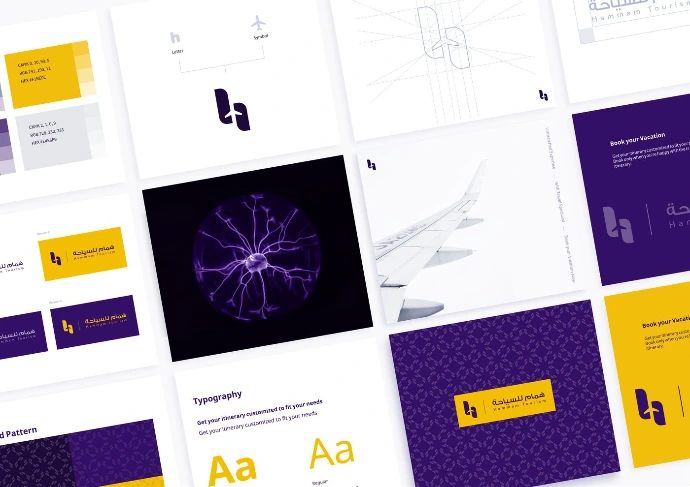
Hammam Tourism
Repositioned from local tour operator to premium regional brand — the positioning and narrative work that ran before a single visual asset was designed, later expressed across paper, screen, and city skyline.
Read the full case study →Before you ask, you might wonder…
Brand Identity is the strategy layer — positioning, narrative, voice — decided first, in writing. Logo Design and Brand Kit are the visual expression of that strategy, and both engagements run faster and more accurately once this exists.
Yes, often more so — a logo without positioning behind it usually means every other piece of marketing is guessing too. This work can run alongside an existing logo and inform how it's used going forward.
Ideally your founder or leadership team for the discovery interviews, plus anyone customer-facing — sales, support — since their view of how customers actually talk about you is core input.
A single brand platform document (PDF and editable source), plus a live workshop walkthrough with your team so it's understood, not just filed away.
Typically four weeks end-to-end across discovery, positioning, narrative, and handover — timeline can extend slightly if stakeholder interviews need to be scheduled across a larger team.
Decide what you stand for — then design around it.
Free 30-minute discovery call. We'll ask harder questions than your last design agency did.
Before the logo, decide what you actually stand for.
Brand identity is the strategy layer — positioning, narrative, and voice — that every logo, template, and ad campaign should be built on top of. We define it first, so nothing after it is guesswork.
Most rebrands start one step too late.
A new logo can't fix a positioning problem. If two competitors could swap taglines and nobody would notice, the issue isn't your visuals — it's that nobody has decided, in one sentence, what makes you different. Brand identity work answers that question first, in writing, before a single design file opens.
One sentence naming your audience, category, and the specific difference that earns them.
Three tone words with real examples of what they sound like in a WhatsApp reply versus a proposal.
The origin story and mission framed as something worth repeating, not a paragraph on an About page nobody reads.
Four weeks from "we're not sure" to a written platform.
Every stage ends with something you sign off on — the strategy is only finished once your team can repeat it back correctly.
Discovery & Audit
Stakeholder interviews, customer insight, and a real competitor audit — not a moodboard exercise, a market map.
Positioning
The strategic territory you'll own — tested against what your competitors already claim, so it's actually defensible.
Narrative & Voice
Brand story, tone of voice, and messaging pillars — written out with real example copy, not adjectives.
Platform Handover
A single brand platform document plus a team workshop, so positioning survives past the deck it was presented in.
What's actually in the platform document.
Written to be used — pulled into pitch decks, briefs to your logo and web designer, and onboarding for new hires.
- Positioning statement
- Competitive & market audit summary
- Brand narrative & origin story
- Voice & tone guide with examples
- Messaging pillars
- Tagline options
- One-line elevator pitch
- Internal brand platform one-pager
Hammam Tourism
Repositioned from local tour operator to premium regional brand — the positioning and narrative work that ran before a single visual asset was designed, later expressed across paper, screen, and city skyline.
Read the full case study →Before you ask, you might wonder…
Brand Identity is the strategy layer — positioning, narrative, voice — decided first, in writing. Logo Design and Brand Kit are the visual expression of that strategy, and both engagements run faster and more accurately once this exists.
Yes, often more so — a logo without positioning behind it usually means every other piece of marketing is guessing too. This work can run alongside an existing logo and inform how it's used going forward.
Ideally your founder or leadership team for the discovery interviews, plus anyone customer-facing — sales, support — since their view of how customers actually talk about you is core input.
A single brand platform document (PDF and editable source), plus a live workshop walkthrough with your team so it's understood, not just filed away.
Typically four weeks end-to-end across discovery, positioning, narrative, and handover — timeline can extend slightly if stakeholder interviews need to be scheduled across a larger team.
Decide what you stand for — then design around it.
Free 30-minute discovery call. We'll ask harder questions than your last design agency did.