iOS and Android, built from one codebase to both stores.
Native-feeling mobile apps — cross-platform where it saves you time and cost, native where performance actually needs it — shipped to the App Store and Google Play, not left as a prototype.
Most mobile apps die at "we're launching soon."
A prototype that impresses in a pitch meeting and an app that survives real users, real store reviews, and a real update cycle are two different products. We build for the second one — shipped, store-approved, and supported past launch day.
Faster to ship and maintain — the right call for most business and consumer apps.
Camera-heavy, AR, or hardware-intensive apps built natively per platform where it matters.
App Store and Google Play listings, assets, and review process managed as part of the build.
Every build is scoped on its own — here's how we plan it, regardless of size.
A simple utility app and a full-featured consumer product don't ship on the same timeline — we won't pretend otherwise. The phases below apply either way; timeline gets scoped once architecture is defined.
Scoping & Architecture
Feature scope, platform decision (native or cross-platform), and backend architecture agreed before development starts.
Development Sprints
Built in short review cycles with working builds you can install and test — not one silent build before a single reveal.
QA & Device Testing
Functional and device testing across real hardware, including RTL and Arabic verification, before submission.
Store Launch & Handover
App Store and Google Play submission managed through approval, with documentation and a support plan at handover.
What's actually in the build.
A live app in both stores — with the pieces that keep it running and updatable after launch.
- iOS & Android application build
- Shared backend & API architecture
- Push notifications & offline support
- App Store & Google Play submission
- Store listing assets (screenshots, copy)
- Analytics & crash reporting setup
- RTL / Arabic device verification
- Post-launch update & maintenance plan
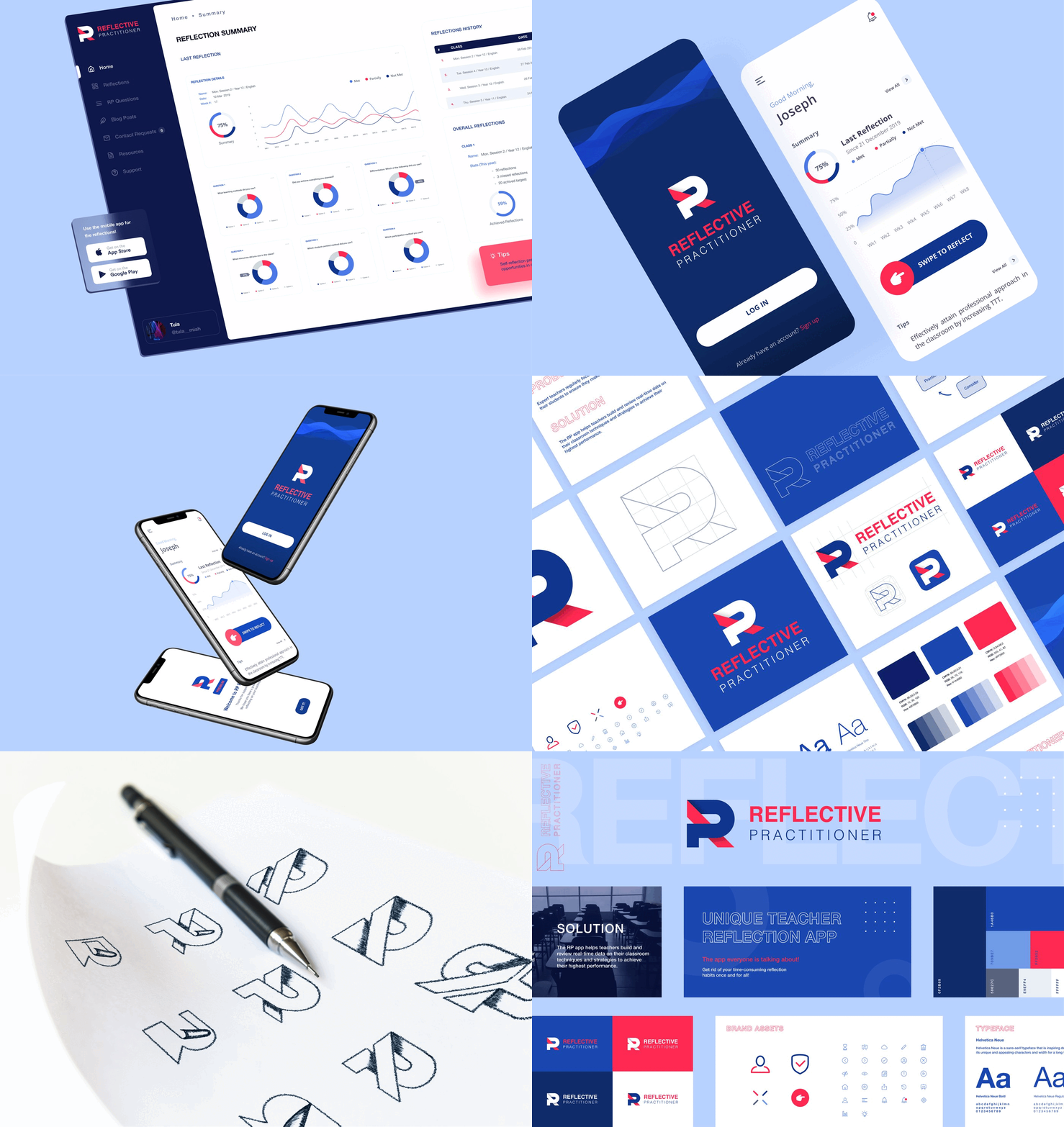
Reflective Practitioner
Native iOS and Android apps on a shared backend, built for 60-second reflections after a lesson — piloted in two UK schools before expanding into the GCC.
Before you ask, you might wonder…
Most business and consumer apps ship faster and cheaper cross-platform without a noticeable difference to users. Native is worth the extra cost mainly for apps leaning heavily on camera, AR, or device hardware — we'll recommend honestly based on your use case, not default to whichever is easier for us.
Yes — listing assets, store copy, and the submission and review process are managed as part of the build, through to approval.
It helps but isn't required — our Product/App Design service can run first to define the UX and UI, or we can build from designs you already have.
Yes — a technical audit of the existing codebase comes first, so you get an honest assessment of what's worth keeping before committing to a plan.
A maintenance and support plan is scoped as part of every build, covering OS updates, bug fixes, and store compliance changes over time.
Get your app past "coming soon."
Free 30-minute discovery call. We'll tell you honestly whether cross-platform or native fits your idea before you spend a riyal.
iOS and Android, built from one codebase to both stores.
Native-feeling mobile apps — cross-platform where it saves you time and cost, native where performance actually needs it — shipped to the App Store and Google Play, not left as a prototype.
Most mobile apps die at "we're launching soon."
A prototype that impresses in a pitch meeting and an app that survives real users, real store reviews, and a real update cycle are two different products. We build for the second one — shipped, store-approved, and supported past launch day.
Faster to ship and maintain — the right call for most business and consumer apps.
Camera-heavy, AR, or hardware-intensive apps built natively per platform where it matters.
App Store and Google Play listings, assets, and review process managed as part of the build.
Every build is scoped on its own — here's how we plan it, regardless of size.
A simple utility app and a full-featured consumer product don't ship on the same timeline — we won't pretend otherwise. The phases below apply either way; timeline gets scoped once architecture is defined.
Scoping & Architecture
Feature scope, platform decision (native or cross-platform), and backend architecture agreed before development starts.
Development Sprints
Built in short review cycles with working builds you can install and test — not one silent build before a single reveal.
QA & Device Testing
Functional and device testing across real hardware, including RTL and Arabic verification, before submission.
Store Launch & Handover
App Store and Google Play submission managed through approval, with documentation and a support plan at handover.
What's actually in the build.
A live app in both stores — with the pieces that keep it running and updatable after launch.
- iOS & Android application build
- Shared backend & API architecture
- Push notifications & offline support
- App Store & Google Play submission
- Store listing assets (screenshots, copy)
- Analytics & crash reporting setup
- RTL / Arabic device verification
- Post-launch update & maintenance plan
Reflective Practitioner
Native iOS and Android apps on a shared backend, built for 60-second reflections after a lesson — piloted in two UK schools before expanding into the GCC.
Before you ask, you might wonder…
Most business and consumer apps ship faster and cheaper cross-platform without a noticeable difference to users. Native is worth the extra cost mainly for apps leaning heavily on camera, AR, or device hardware — we'll recommend honestly based on your use case, not default to whichever is easier for us.
Yes — listing assets, store copy, and the submission and review process are managed as part of the build, through to approval.
It helps but isn't required — our Product/App Design service can run first to define the UX and UI, or we can build from designs you already have.
Yes — a technical audit of the existing codebase comes first, so you get an honest assessment of what's worth keeping before committing to a plan.
A maintenance and support plan is scoped as part of every build, covering OS updates, bug fixes, and store compliance changes over time.
Get your app past "coming soon."
Free 30-minute discovery call. We'll tell you honestly whether cross-platform or native fits your idea before you spend a riyal.